The craft beer market created the modern growler as a practical solution to a specific problem: how do you let someone take draft beer home from a tap without destroying the carbonation? The growler format solved that problem well enough that it’s now a standard item in the drinkware category — sold not just by taprooms but by outdoor retailers, kitchen supply stores, corporate merchandise buyers, and promotional products companies.
That range of buyers means the category has significant variation in how well the product is understood before it’s ordered. Buyers coming from a general drinkware background sometimes treat a growler like a large water bottle with a swing-top lid. That framing leads to spec gaps that show up as problems when the product is used for its intended purpose.
The carbonation seal is not optional
The core functional requirement of a beer growler is maintaining carbonation after filling. When a taproom fills a growler and hands it to a customer, the expectation is that the beer stays carbonated for at least 24–48 hours under refrigeration if the growler isn’t opened, and remains drinkable through the same session once it is.
This puts specific demands on the lid and gasket system that standard water bottle lids don’t face. Water is incompressible and doesn’t generate pressure inside the container. Carbonated liquid under pressure will find any weakness in the seal and push through it. A growler lid that passes a water-fill leak test may still fail with carbonated contents because the pressure dynamics are different.
The gasket material and the compression mechanism both matter. A silicone gasket that seals fully when the swing-top or screw cap is engaged creates the pressure barrier needed for carbonation retention. A gasket that’s too thin, has an uneven seating surface, or loses compression after repeated closures creates a slow carbonation leak that the buyer’s customers will notice immediately.
When sourcing growler wholesale, ask the manufacturer specifically about carbonation retention testing. A well-made growler should maintain carbonation with a freshly filled, sealed product for at least 24 hours at refrigerator temperature. Some manufacturers conduct this test as part of QC; others don’t. The ones who do are generally producing a better product.
The capacity accuracy question
Growler capacity is typically stated as the fill volume — 32oz, 64oz, 128oz — but the nominal capacity and the actual fill volume aren’t always the same. A growler labeled 64oz may have a body that holds 64oz of liquid plus several additional ounces of headspace, or it may fill exactly to the rim with no headspace at all.
For taproom use, this matters because bartenders pour to a fill line, not to the brim, and they need that fill line to correspond to the labeled volume for compliance and consistency. In a wholesale spec, clarify whether the stated capacity refers to maximum fill volume or nominal fill volume with headspace. For taproom products, nominal fill volume with headspace is standard — specify where the fill line sits relative to the bottle’s exterior dimensions.
Insulation and temperature hold for draft
Insulated stainless steel growlers have taken most of the market from glass because they keep beer colder longer and don’t break. But insulation quality varies, and “double-wall vacuum insulated” covers a wide performance range.
For draft beer use, the relevant question is how long the contents stay at serving temperature after filling at the tap. A poorly insulated growler may maintain temperature for 4–6 hours; a well-insulated one for 12–24 hours. That difference isn’t visible from the outside and isn’t captured by the label.
Ask for cold retention performance data — specifically, how long a filled, sealed growler maintains temperature below 40°F starting at refrigerator temperature in ambient conditions around 75°F. This is more useful than a generic “keeps cold for X hours” claim, which often applies to ice retention rather than refrigerator-temperature contents.
Mouth opening and cleaning
Wide-mouth growler openings have become standard because they’re easier to clean and allow visual inspection of the interior before refilling. Taprooms that reuse their own branded growlers particularly need wide openings since they’re responsible for sanitation.
The practical minimum for cleaning access is around 50–60mm opening diameter — wide enough for a standard growler brush to reach the interior completely, including shoulder and lower body. Narrower openings create zones where beer residue accumulates, which becomes a sanitation issue on repeated fills.
Also check the interior surface finish. A smooth interior without sharp seams or surface irregularities is easier to clean and less likely to harbor residue. Interior polishing during production makes a measurable difference in cleanability.
Handle design at larger capacities
At 64oz and above, a full growler is heavy enough that the handle becomes a meaningful ergonomic consideration. A gallon of liquid weighs approximately 8.5 pounds; a 128oz growler full of beer is well over 10 pounds including container weight. A handle sized for a one-hand grip and positioned at the container’s center of gravity makes that weight manageable.
For wholesale orders at large capacities, specify handle dimensions and attachment method. Welded handles are more secure than riveted or threaded ones under repeated load; weld quality should be part of the QC inspection for any large-format growler with an integral handle.
Thread design for screw-cap models
For screw-cap designs, thread pitch and number of turns to full closure matter for both ease of use and seal reliability. A cap requiring many rotations to close is inconvenient during an active session. A cap closing in fewer rotations is more convenient but relies on shorter thread engagement for sealing — the design trade-off has to balance convenience against seal security. The best screw-cap growlers seal in two to three full rotations with a tactile indication when the seal is fully engaged.
Exterior finish for taproom branding
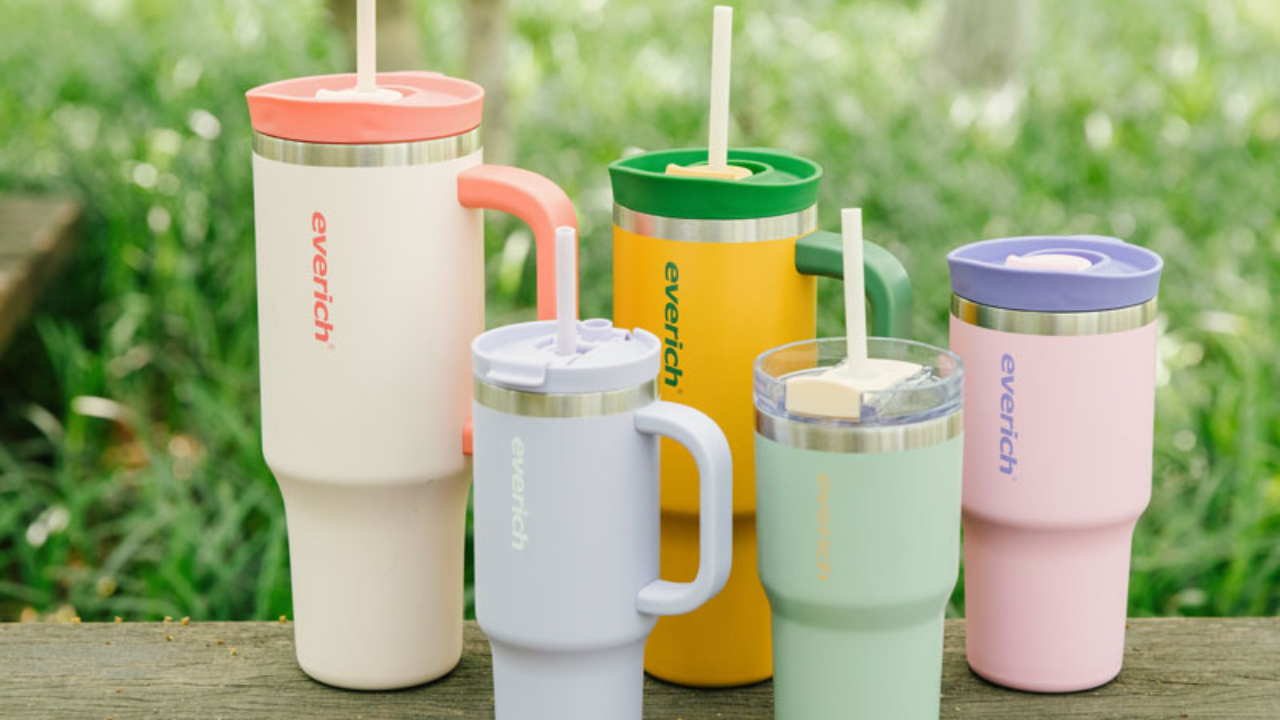
Most taprooms want their growlers to carry the brewery’s branding prominently. For stainless steel growlers, laser engraving holds up through the repeated fills, cleanings, and handling cycles that a taproom growler goes through over its lifespan. Screen printing degrades faster in this context — the cleaning chemicals and physical handling that a repeatedly-used growler experiences will wear screen-printed graphics noticeably within a season of use.
For powder-coated growlers with a logo, the combination of powder coat as the base finish and laser engraving through it provides both a distinctive visual look and durability. The engraved area exposes bare steel against the coated surface, which creates a clean contrast that holds up indefinitely. Specify the coating color to a Pantone reference and confirm the laser engraving depth and line weight in the sample before approving production.